

Buying quality facial skincare: the 2026 guide
Table of Contents
- Why buying quality facial care really changes the results
- Medical-grade skincare: what that actually means
- How to read a beauty product label (and spot serious formulas)
- Quebec natural cosmetic products: a credible option or a marketing ploy?
- Devices that actually help your facial care penetrate
- Budget vs. efficacy: where to spend your money based on your age
- Shopping online without mistakes: delivery, returns, and support
- Frequently Asked Questions
Last updated: September 15, 2026
Why buying quality facial care really changes the results
The difference between skin that responds and skin that stagnates rarely comes down to the number of products piled on. It comes down to the quality of what you apply and how well the skin absorbs it.
Buying quality facial care is not about paying more for a prettier bottle. It is about choosing formulas with active ingredients dosed to truly take effect, and a texture that penetrates instead of sitting on the surface. A concentrated formula costs more to produce than a diluted one.
The most expensive product isn't always the most effective, and the cheapest is almost never the right trade-off. The real criterion: consistency between your skin type, your actual needs, and the concentration of active ingredients.
Medical-grade skincare: what that actually means
A medical-grade skincare product, or cosmeceutical, is a formula with active ingredients dosed to produce a measurable effect on the skin, not just to scent a cream. The difference from a classic cosmetic product lies in the formulation, not the packaging.
In practice, this means several things:
- Active ingredients identified with their concentration, such as hyaluronic acid or ceramides
- A formula tested clinically on panelists, not just in an internal laboratory
- The absence of added fragrance for reactive skin
- Packaging that protects the active ingredients from oxidation
A damaged skin barrier lets irritants in and loses its natural moisture. Until it is repaired, even the best serum will yield no results.
This is why a gentle cleanser and a moisturizer rich in ceramides count for more, initially, than a serum concentrated in antioxidants.
How to read a beauty product label (and spot serious formulas)
Reading a beauty product label involves examining the INCI list in descending order of concentration, identifying the active ingredients actually present, and discarding formulas where they appear at the end of the list. It is the most useful skill to acquire.
The basic rule: ingredients are listed from highest to lowest concentration. If hyaluronic acid appears after the preservative, it is present in a symbolic dose. It is on the label, but it won't do anything.
Three signals that distinguish a serious formula:
- Active ingredients appear in the first ten ingredients. The higher they are, the more real the concentration.
- The "fragrance-free" statement is explicit. A hypoallergenic formula adds no fragrance, not even natural ones.
- The product is presented as clinically tested, with the method indicated. A test on twenty people over four weeks does not have the same value as a test on two hundred.
Quebec natural cosmetic products: a credible option or a marketing ploy?
Quebec natural cosmetic products hold a real place in the market, driven by traceability and short supply chains. The credibility of a natural brand, however, depends on transparency regarding the concentration of active ingredients, not the origin of the plants.
A "100% natural" formula is not automatically gentler or more effective. Some natural ingredients, like essential oils, are more irritating than a well-tolerated synthetic active ingredient. For sensitive skin, the useful criterion remains "fragrance-free" and "hypoallergenic," not "natural."
What "natural" means on a label
In Canada, Health Canada requires that claims must not be false or misleading, without a minimum threshold for naturalness. A brand can therefore label a product containing 5% botanical ingredients as "natural."
This creates an ambiguity that serious brands compensate for with transparency. Three specific mentions distinguish a credible natural formula:
- The percentage of naturalness is indicated (e.g., "98% natural origin"), along with the calculation method.
- Active ingredients are named with their concentration, not just their origin.
- Preservatives are disclosed even when they are of natural origin (sorbic acid, sodium benzoate, grapefruit seed extract).
The "preservative-free" trap
A water-based product without preservatives is susceptible to bacteria and mold from the moment it is opened. A "preservative-free" cream based on water and aloe vera must be packaged in an airless container, sold in very small formats for quick use, or contain an ingredient acting as a preservative that is not declared as such (salt, high-dose sugar).
For reactive skin, a well-dosed and well-tolerated preservative is preferable to microbial contamination. The real criterion is not "with or without preservatives," but "preservative adapted to the product type and duration of use."
How to evaluate a local brand in five minutes
| Criterion | Serious formula | Marketing ploy |
|---|---|---|
| INCI List | Actives in the first 10 | Actives at the end of the list |
| Fragrance | Absent or disclosed | "Natural fragrance" unspecified |
| Testing | Method and duration indicated | "Tested" without details |
| Preservation | Adapted preservatives | "Preservative-free" on water-based product |
| "Natural" claim | Percentage indicated | "100% natural" without method |
| Manufacturing | Production location and date accessible | Vague origin |
The ecological and sustainable argument has value, provided it is accompanied by proven efficacy.
Devices that actually help your facial care penetrate
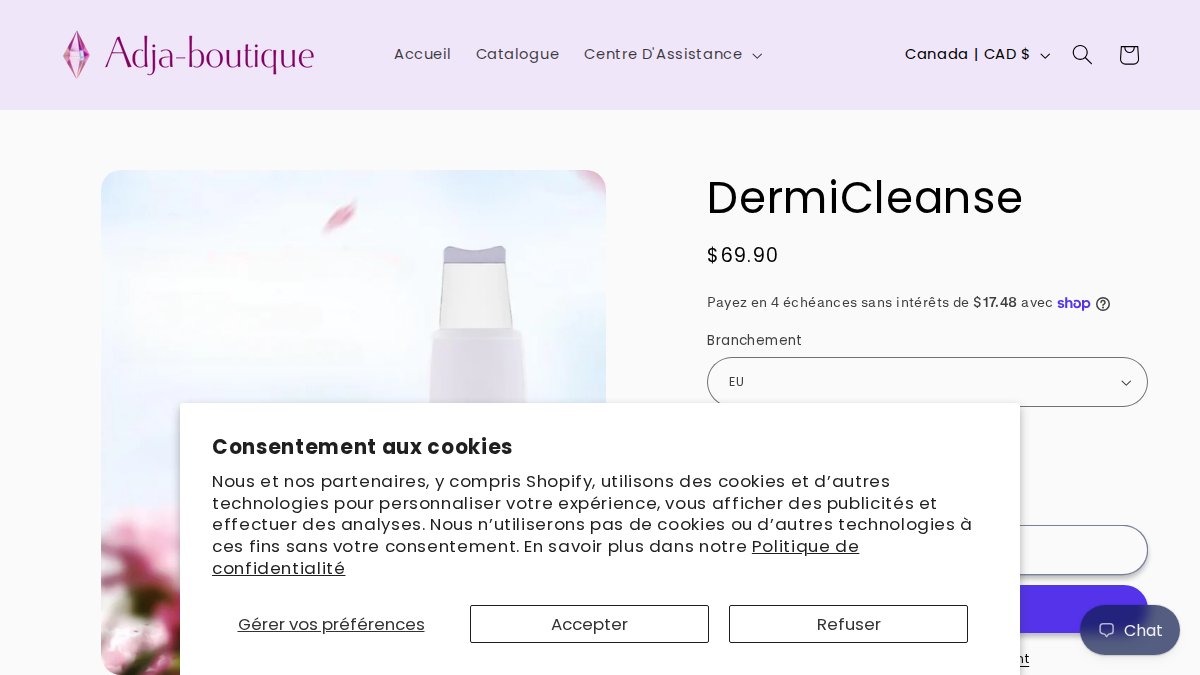
DermiCleanse: deep ultrasonic cleansing for $69.90
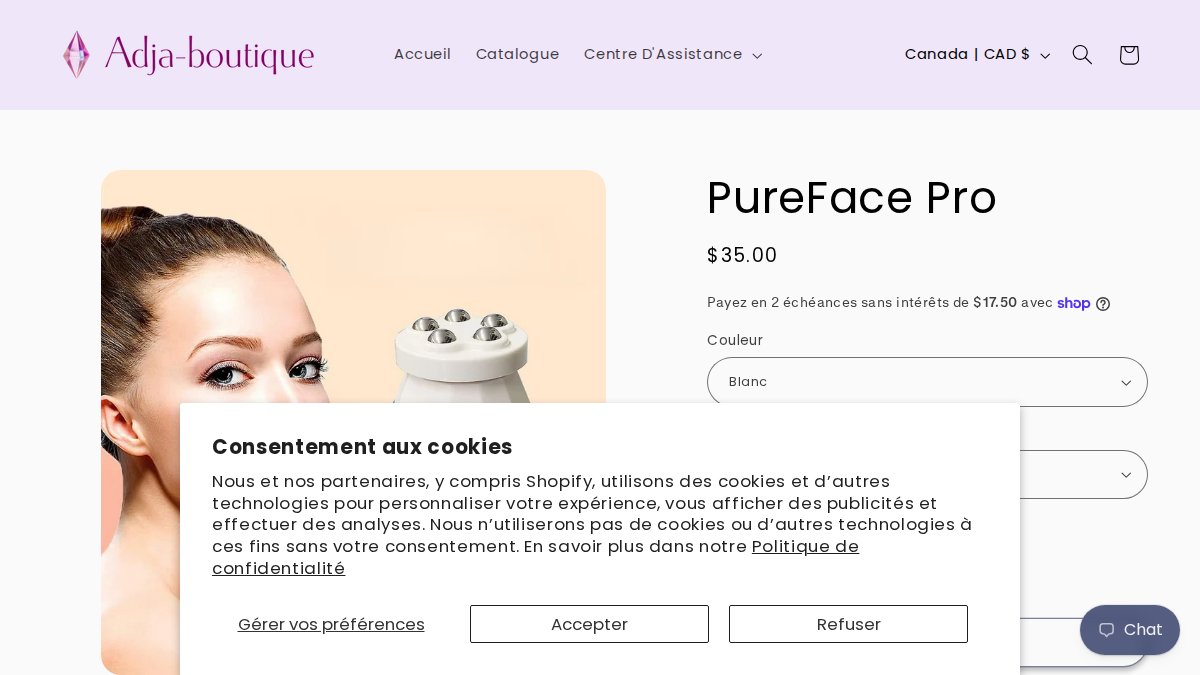
PureFace Pro: the 4-in-1 brush for $35.00 for busy routines
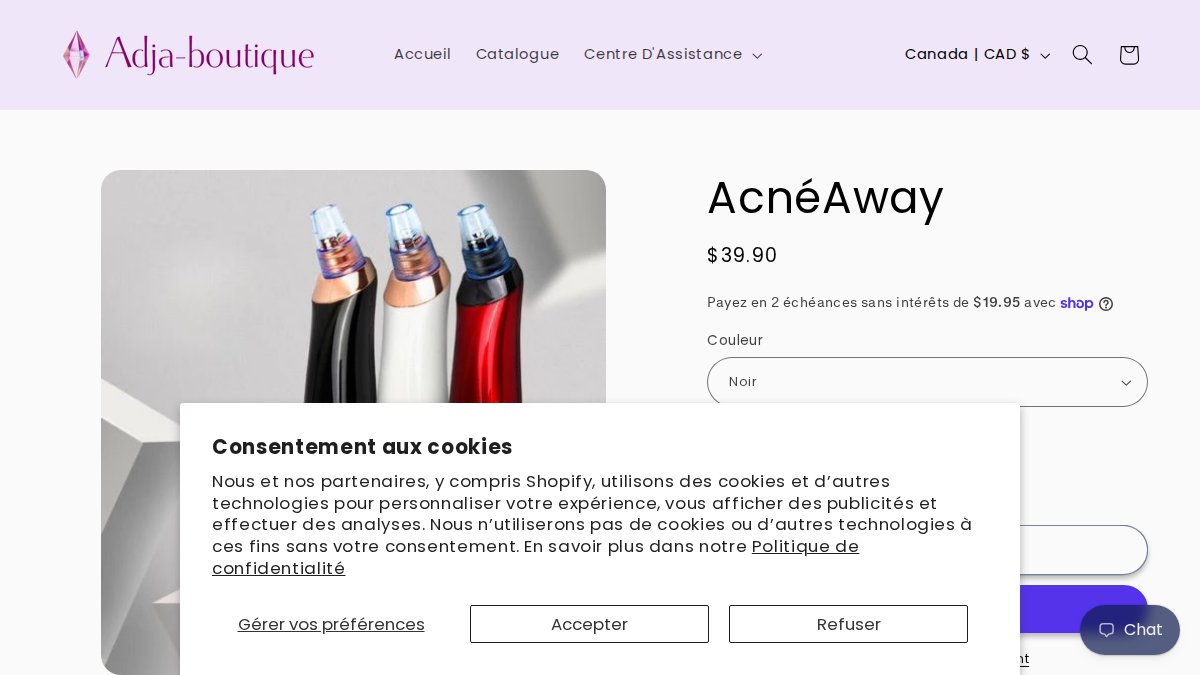
AcnéAway: targeted suction for $39.90 for clogged pores
MicroLift Face and SubliNeck: contouring for under $35
Budget vs. efficacy: where to spend your money based on your age
| Profile | Priority 1 | Priority 2 | Recommended device |
|---|---|---|---|
| 25-35 years old, oily or acne-prone skin | Deep cleansing | Sebum regulation | AcnéAway ($39.90) |
| 25-35 years old, busy routine | Cleansing + exfoliation | Product absorption | PureFace Pro ($35.00) |
| 35-50 years old, early sagging | Contours and tone | Active ingredient penetration | MicroLift Face ($34.90) |
| 45 years and older | Neckline | Overall firmness | SubliCou ($24.90) |
Shopping online without mistakes: delivery, returns, and support
What most guides don't tell you about product preservation
Returns on cosmetics: what is actually possible
A serious shop compensates with a clear policy:

Claims and compliance: what you can demand
Frequently Asked Questions
How can you identify high-quality facial skincare before buying?
Three reliable signs: a complete INCI list where active ingredients (hyaluronic acid, ceramides, antioxidants) appear before fragrances, a clear indication of the target skin type, and the absence of unrealistic promises. Serious skincare also indicates usage instructions and volume. Beware of formulas promising visible skin rejuvenation in 24 hours: a skin barrier repairs over several weeks, not overnight.
Are medical-grade skincare products useful for sensitive skin?
Yes, often. Medical-grade formulas focus on a higher concentration of active ingredients and fewer unnecessary ingredients, reducing the risk of reaction. Look for "hypoallergenic" and "fragrance-free" labels, and test on a small area for 48 hours. A concentrated formula is used in small amounts: two to three drops are enough for the entire face, making the cost per use more reasonable than it may seem.
How do you read a beauty product label if you're not a chemist?
Read the INCI list from top to bottom: ingredients are listed by decreasing concentration. If the active ingredient you are looking for appears after the fragrance, it is present in minimal amounts. Then, look at the first three or four ingredients: these determine the texture and absorption. A cleanser whose first ingredient is water will remain gentler than one with alcohol at the top of the list.
Why are Quebec natural cosmetic products sometimes more expensive?
Small local productions don't have the volume to lower prices, and organic certification adds inspection costs. You are also paying for ingredient traceability and shorter distribution channels. This does not guarantee better effectiveness: a natural ingredient can be just as irritating as a synthetic one. Compare the concentration of active ingredients and volume before judging, not just the displayed price.
Do I need a device to make my facial skincare work better?
Not mandatory, but it changes absorption. Ultrasonic cleansing or a brush dislodges impurities that block serum penetration. Expect to pay $35.00 for a rechargeable 4-in-1 brush, $39.90 for a blackhead vacuum, or $69.90 for an ultrasonic cleanser. These amounts pay off if you replace salon treatments with a home routine of a few minutes a day.